Bush Hill Park

Course Manager's Blog: Fusarium on the Greens, 12th March 2026

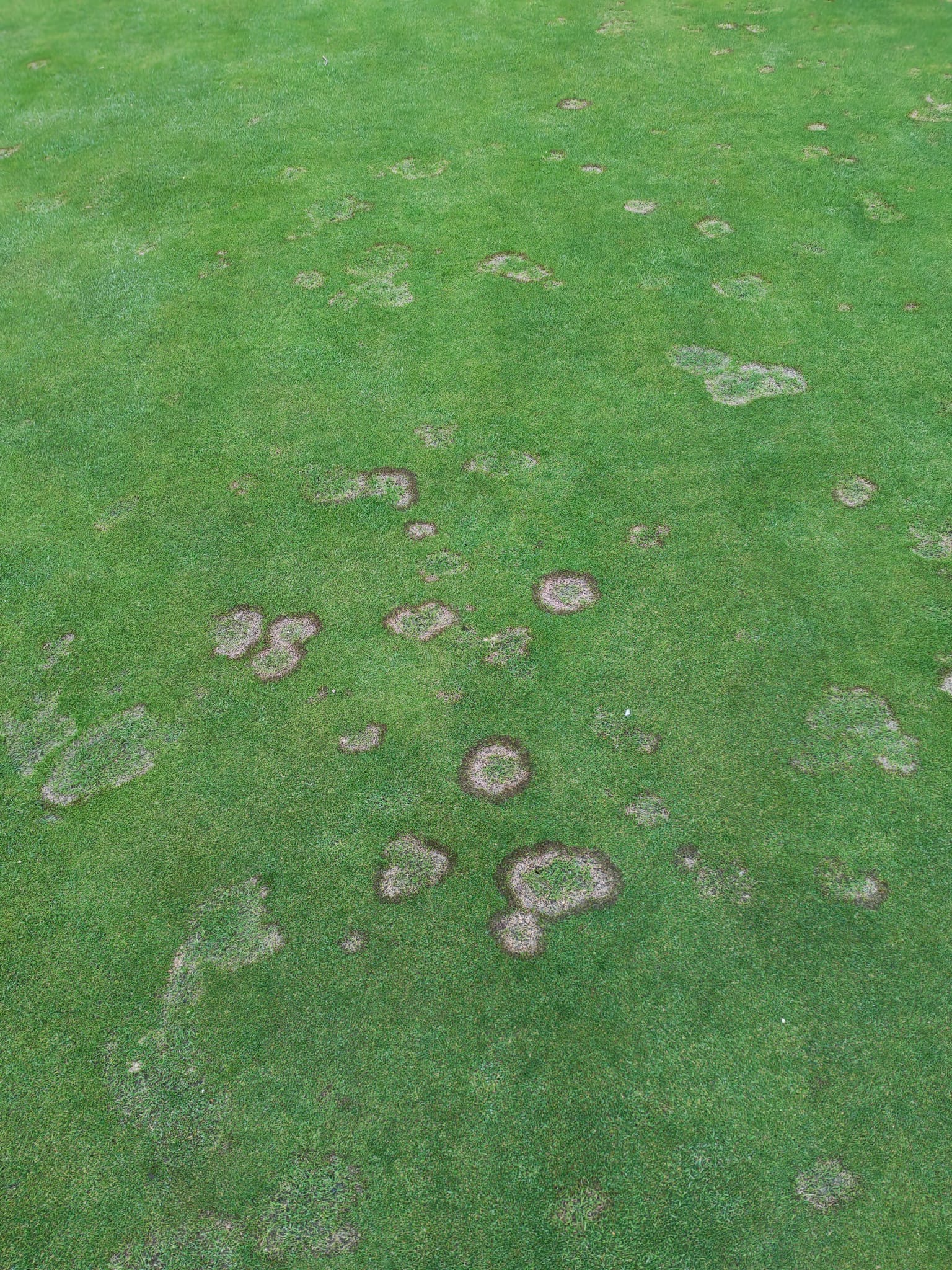
Over the past couple of weeks you may have noticed a few patches and scars appearing on some of the greens, so I thought it would be worth explaining a little about what’s going on at the moment.
Like many courses at this time of year, we’re currently dealing with Fusarium, more properly known as Microdochium Patch. It’s a turf disease that most golf courses across the UK see during the winter months, and the recent spell of damp, mild conditions has allowed it to become quite active here at Bush Hill Park.
Why it’s appearing now Fusarium thrives when conditions are cool, damp and still, which is very much the sort of weather pattern we’ve had recently. When the turf stays wet for long periods – whether from rain, heavy dew or just a lack of drying conditions – it creates the environment the disease likes.
From a greenkeeping point of view this time of year can be quite frustrating. The grass isn’t growing very quickly, so it can’t repair itself particularly fast, and when the weather keeps switching between mild and damp conditions it allows the disease to keep ticking along.
My team and I are constantly monitoring the greens and doing everything we can to stay on top of it, but sometimes the weather simply lines up in the wrong way and we see a bit of an outbreak like we are experiencing at the moment.
The type of grass plays a part
Another factor that influences how much Fusarium we see is the type of grass within the greens. Many greens in the UK naturally contain a high percentage of Poa annua, or annual meadow grass. While Poa can produce very good putting surfaces, it is unfortunately more susceptible to Fusarium than some of the finer turf grasses.
Bent grass, which we try to encourage over time through our maintenance practices, generally has better natural resistance to the disease. That’s one of the reasons greenkeepers often talk about gradually improving the grass composition of greens over the long term.
Why some greens are worse than others
You may also notice that some greens are affected more than others. This usually comes down to things like shade, airflow and how quickly a green dries out after rain or heavy dew.
Areas that tend to hold moisture a little longer are naturally where the disease will appear first, while greens that receive more sunlight and airflow often dry quicker and hold up better.
What we do to manage it
There isn’t one single solution when it comes to turf disease. Instead, it’s about a number of ongoing practices that help reduce the conditions the disease enjoys.
Throughout the winter the team works hard to:
- Remove morning dew from the greens
- Maintain as much airflow around greens as possible
- Manage nutrition carefully so the grass stays healthy without becoming soft and susceptible
- Carry out aeration and top-dressing to keep the soil open and draining well
- Apply fungicides when conditions justify it.
Even with all of that in place, when the weather lines up the way it has recently we can still see some disease activity.
The good news
The positive thing is that Fusarium rarely kills the grass plant completely. What you are mostly seeing at the moment are the scars left behind after the disease has passed through the turf.
Once we start to see warmer temperatures and stronger growth, the greens will naturally begin to recover and these areas will gradually grow back in.
Part of managing winter greens
Golf greens are living surfaces and managing them through the winter months is always a bit of a balancing act with the weather.
The greens are monitored daily and the team continues to do everything possible to keep them healthy and putting as well as possible while we work through this spell of conditions.
We all want the same thing – good, smooth putting surfaces – and once we start to see a bit more warmth and growth in the grass, the greens will naturally recover.
Thank you, as always, for your patience and support.
Leigh Hyde
Course Manager
Created by intelligentgolf version 10.1.2.