Bush Hill Park

Course Manager's Blog: A tough winter test for the greens, 27th January 2026
Many of you may have noticed some patching and scarring on the greens over the winter period. I wanted to take the opportunity to explain what this is, why it has occurred, and what we are doing to manage and reduce its impact.
The patches you are seeing are caused by Fusarium patch (also known as Microdochium patch), a turf disease that thrives in mild, wet conditions. Unfortunately, the weather patterns we have experienced throughout this winter prolonged rainfall, high humidity, and very limited drying conditions have created an ideal environment for this disease to develop. This has not just affected us; many golf clubs across the country have been facing similar challenges.
Why this winter has been so difficult
This winter has been particularly challenging from a turf management perspective. Extended periods of rainfall have left ground conditions consistently saturated, limiting opportunities for natural drying and recovery. With soil temperatures remaining relatively mild, the disease has been able to remain active for much longer than we would normally expect.
When conditions stay wet for prolonged periods, the turf becomes stressed and more susceptible to disease. Even with careful management, Fusarium can still take hold when the weather continues to work against us.
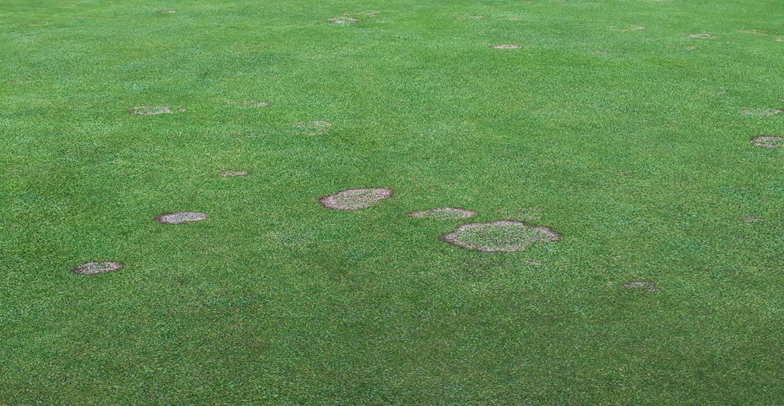
Active fusarium patch causing turf thinning and discolouration
What we have been doing to manage it
Throughout the winter, we have been closely monitoring the greens and adjusting our approach to minimise stress and limit the spread of disease. Our focus has been on balancing protection with recovery, while working within current regulations and weather constraints.
Our actions have included:
- Regular inspection and monitoring of all greens
- Targeted fungicide applications where conditions and regulations allow
- Careful adjustment of nutrition to avoid excessive soft growth
- Managing moisture levels as best we can despite ongoing rainfall
- Minimising disruptive maintenance during peak disease pressure.
Despite these measures, Fusarium pressure has remained high at times. This can be frustrating to see, but there is no single quick fix during winters like this. Management is about persistence, timing, and protecting the turf as best as possible until conditions improve.
What happens next
As we move towards drier and brighter conditions, our focus shifts increasingly towards recovery. This will include:
- Supporting growth with appropriate nutrition
- Aeration to improve drainage and oxygen levels in the soil
- Overseeding where required to encourage recovery in affected areas
- Continuing to monitor disease activity closely.
Some scarring may remain visible for a period, particularly in areas that have been hardest hit. This is normal following a winter with high disease pressure, and these areas will improve as growth returns in the spring.
Leigh Hyde
Course Manager
Created by intelligentgolf version 10.1.2.